

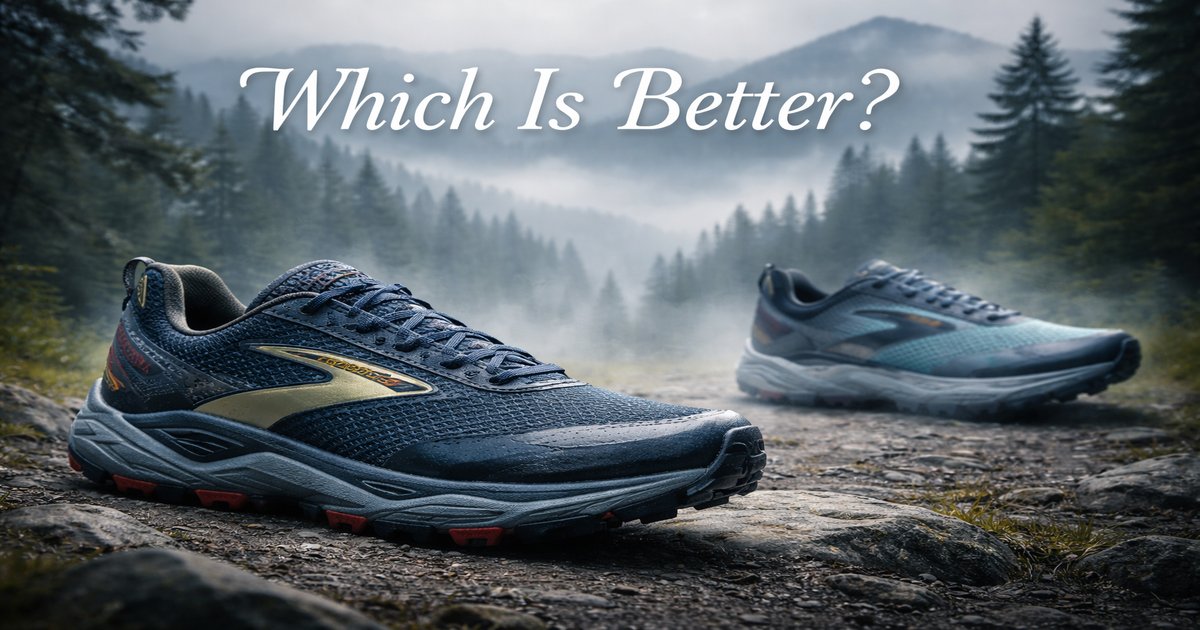
You’re heading out for a weekend trail run, and the gear you choose can make or break your adventure. When you’re torn between the Brooks Cascadia and the Ghost Trail, knowing what sets them apart can be the difference between a smooth run and a bumpy ride.
| Feature | Brooks Cascadia | Ghost Trail |
|---|---|---|
| Weight | 10.7 oz (303 g) | 10.3 oz (292 g) |
| Heel-to-Toe Drop | 8 mm | 12 mm |
| Cushioning | Balanced | Maximum |
| Gore-Tex Lining | ✓ | ✗ |
| Terrain Adaptability | Multi-terrain | Road/Light Trail |
| Price Range | $130-$150 | $120-$140 |
✅ brooks cascadia Pros
- Excellent grip on diverse terrains
- Durable build with protective features
- Comfortable fit with good support
❌ brooks cascadia Cons
- Heavier than some competitors
- Higher price point
- Can feel bulky for road use
✅ ghost trail Pros
- Lightweight and agile
- Exceptional cushioning for road runs
- Affordable pricing
❌ ghost trail Cons
- Limited traction on technical trails
- Less durable for rugged use
- Minimal protection on rough terrains
Performance on Different Terrains
The Brooks Cascadia is your go-to for versatility across rocky, muddy, or mixed trails. Its rugged outsole and adaptable midsole make it a reliable partner when running through unpredictable conditions. On the other hand, the Ghost Trail shines on smoother paths. Its lighter build and superior cushioning offer a smooth ride for those who prefer road running or light trails. If your routine includes both terrains, consider where you spend more time; Cascadia for trails or Ghost Trail for roads.
Build Quality and Durability
Brooks Cascadia is built like a tank. It’s heavy but for a reason—it’s made to withstand the elements. The Gore-Tex lining and reinforced toe cap can take a beating from rocks and roots. Meanwhile, the Ghost Trail focuses on comfort with less emphasis on durability. It holds up well for regular runs but might struggle with the harshness of trails over time. If you need a shoe that lasts multiple seasons of tough use, Cascadia is your guy. But for regular road warriors, Ghost Trail does just fine.
Value for Money
When it comes to value, the Ghost Trail is more budget-friendly. It offers great comfort and a reliable performance for a decent price. The Cascadia, while more expensive, justifies its cost with superior durability and versatile features. If budget constraints exist, the Ghost Trail won’t disappoint for road running. If you’re an all-weather, all-terrain enthusiast willing to invest in longevity, Cascadia offers a better return over time.
Both shoes have their quirks. The Cascadia, though versatile, can feel cumbersome if you’re transitioning between road and trail frequently. The Ghost Trail sacrifices durability for comfort, so don’t expect it to last through rocky escapades. Consider these points if you want no surprises after purchase.
Our Final Verdict: Which One Should You Buy?
If you’re an avid trail runner who enjoys tackling technical terrains, the Brooks Cascadia is your best bet. Its robust build and adaptability make it perfect for rough paths. For those who stick to roads or light trails and prioritize comfort without breaking the bank, the Ghost Trail is an excellent choice. It offers cushioning and agility, ideal for those daily runs around the neighborhood.
How do the Brooks Cascadia and Ghost Trail fit?
The Brooks Cascadia generally fits true to size with a snug feel, especially in the midfoot. The Ghost Trail offers a slightly roomier toe box, making it more comfortable for longer runs.
Are these shoes compatible with orthotics?
Yes, both shoes have removable insoles, which allow you to insert custom orthotics. However, the Ghost Trail’s cushioning may be more forgiving for orthotic inserts.
How long do these shoes typically last?
For regular use, expect the Brooks Cascadia to last around 400-500 miles, thanks to its durable construction. The Ghost Trail might see a shorter lifespan, around 300-400 miles, due to its lighter build.