

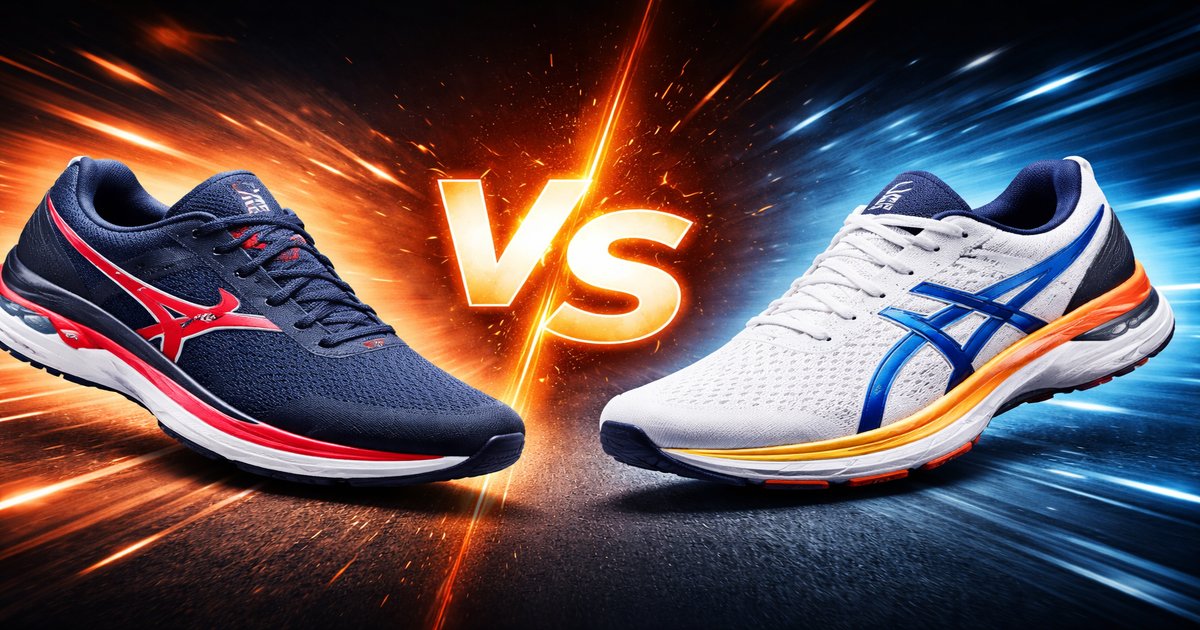
You’re in the market for a new pair of running shoes, but you’re torn between Mizuno and Asics. These two brands are like the Messi and Ronaldo of the running shoe world—both excellent in their own right, but each with its own unique strengths. Let’s break down what you can expect from each so you can hit the ground running.
| Feature | Mizuno | Asics |
|---|---|---|
| Cushioning Technology | Wave Plate | Gel Technology |
| Weight | 320g (Wave Rider 25) | 290g (Gel-Nimbus 24) |
| Arch Support | ✓ High | ✓ Moderate |
| Durability | ✓ | ✓ |
| Breathability | ✓ | ✓ |
| Price Range | $130 – $160 | $140 – $180 |
✅ mizuno Pros
- Exceptional arch support for high arches.
- Wave Plate technology provides a smooth ride.
- Durable build, lasting for hundreds of miles.
❌ mizuno Cons
- Heavier compared to some competitors.
- Limited color options.
✅ asics Pros
- Lightweight design enhances speed and agility.
- Gel technology offers superior shock absorption.
- Wide range of styles and colors.
❌ asics Cons
- Can be pricey for the latest models.
- Moderate arch support might not suit everyone.
Performance
When it comes to performance, Mizuno’s Wave Plate technology offers a stable ride that maintains its shape over time, making it ideal for long-distance runners with high arches. Asics, on the other hand, excels with its Gel technology, providing exceptional shock absorption that’s perfect for those who log high-impact miles. If you’re someone who needs a bit more bounce in your step, Asics will likely be the better choice.
Build Quality
Both brands are top-notch in terms of build quality, but Mizuno stands out for its durability. If you’re the type to push your shoes to their limit, Mizuno’s construction can withstand the test of time. Asics offers a lighter build that doesn’t sacrifice quality, but you might find the outsole wears down a bit faster if you’re doing high-mileage weeks.
Value
Mizuno provides excellent value for money, especially if you’re looking for shoes that offer high arch support and durability. Asics, while slightly more expensive, brings a stylish flair and lightweight design that appeals to those who prioritize speed. If budget is a concern, Mizuno offers a bit more bang for your buck in terms of longevity.
Both brands have their quirks that aren’t always obvious. Mizuno’s heavier weight can be a drag on speed workouts. Asics, although stylish, might not provide enough arch support if you’re a high-arched runner. Also, both brands can run a bit narrow, which could be a deal-breaker for those with wider feet.
Our Final Verdict: Which One Should You Buy?
If you’re a long-distance runner with high arches looking for durability and stability, go with Mizuno. Their Wave Plate technology will keep your feet comfortable over the long haul. But if you’re after a lightweight, shock-absorbing shoe with a bit more flair, Asics is your best bet. Pricey, yes, but worth it if you’re all about that plush ride.
Do Mizuno and Asics shoes fit true to size?
Both brands generally fit true to size, but they can run narrow. Consider going half a size up if you have wider feet.
How long do Mizuno and Asics shoes typically last?
Mizuno shoes can last up to 500 miles, thanks to their durable construction. Asics shoes might start showing wear around 400 miles, especially if you run often on hard surfaces.
Are Mizuno and Asics shoes good for casual wear?
Yes, both brands offer models that are stylish enough for casual wear, but their performance features shine best during runs or workouts.