

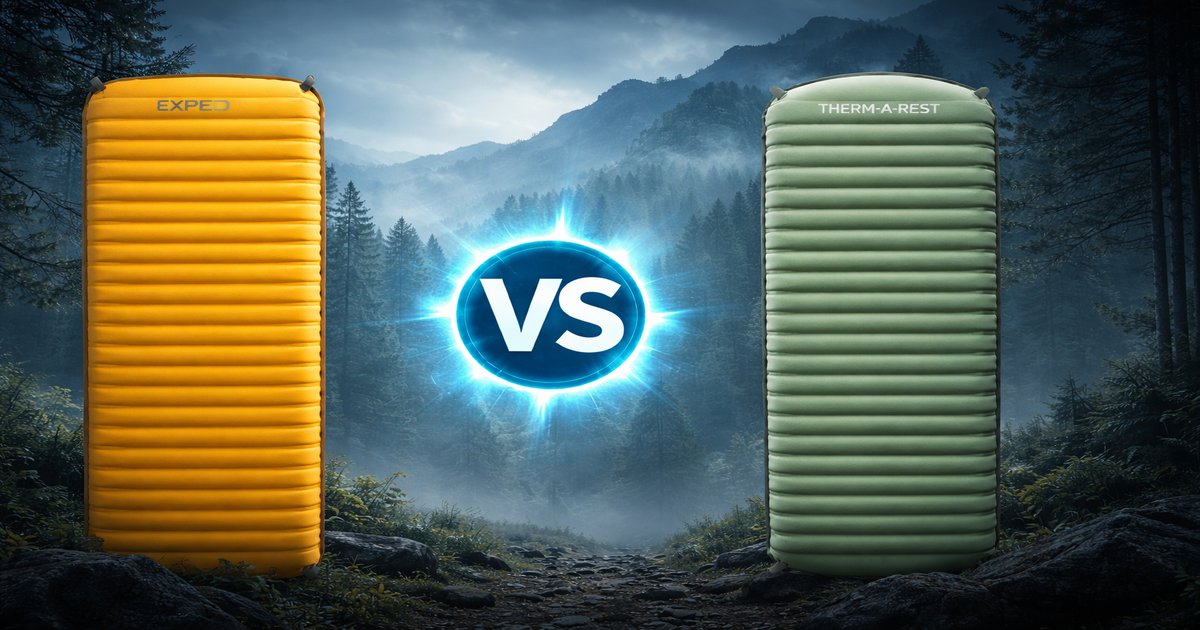
You’re headed out on a weekend camping trip, and a good night’s sleep is crucial. You’ve narrowed it down to two contenders: Exped and Therm-a-Rest sleeping pads. Which one will give you the comfort and durability you need without weighing down your pack?
| Feature | Exped | Therm-a-Rest |
|---|---|---|
| Weight | 1.1 lbs | 1.2 lbs |
| R-Value | 4.8 | 4.2 |
| Inflation Method | Integrated Pump | Self-Inflating |
| Pack Size | 5.5 x 9 in | 6 x 11 in |
| Thickness | 3.5 in | 2.5 in |
| Warranty | 5 Years | Lifetime |
✅ exped Pros
- Higher R-Value for better insulation.
- Thicker padding provides more comfort.
- Compact pack size makes it easier to carry.
❌ exped Cons
- Integrated pump can be cumbersome.
- Higher price point.
✅ therm a rest Pros
- Self-inflating design is user-friendly.
- Lifetime warranty offers peace of mind.
- Durable construction.
❌ therm a rest Cons
- Heavier and bulkier when packed.
- Lower R-Value might not suffice in colder climates.
Performance in the Field
When it comes to performance, Exped’s higher R-Value and thicker padding make it an excellent choice for colder weather and rougher terrains. It keeps you warmer and more comfortable, especially if you’re a side sleeper. On the flip side, Therm-a-Rest’s self-inflating mechanism gets top marks for ease of use. If you’re setting up camp after a long day of hiking, the last thing you want is to wrestle with a pump. Therm-a-Rest inflates quickly and is ready to go with minimal effort, though it may not keep you as warm in the chilly night air.
Build Quality and Durability
Both brands are well-regarded for their durability, but Therm-a-Rest takes the edge with its lifetime warranty. It’s built to withstand frequent use and rough handling, making it a reliable long-term investment. Exped, while also durable, focuses more on comfort features and might require more careful handling due to its integrated pump system and lighter construction materials. If you’re tough on gear, Therm-a-Rest might be the safer bet, although Exped holds its own remarkably well against the rigors of the trail.
Value for Money
Exped’s higher price tag could be a deterrent, but if you’re looking for superior insulation and comfort, it justifies the cost. Therm-a-Rest offers great value for those who prioritize durability and ease of use over all else. While Exped may offer better features for extreme conditions, Therm-a-Rest’s lower price and lifetime warranty make it a tempting choice for the average camper who doesn’t venture into sub-zero temperatures frequently.
Both pads have their quirks. Exped’s integrated pump can get finicky, especially in colder temperatures, and may require extra care. Therm-a-Rest’s self-inflating tech is great but can leave you with a slightly deflated pad by morning if not properly sealed. Weight differences might not seem like much, but every ounce counts on long treks.
Our Final Verdict: Which One Should You Buy?
If you’re someone who enjoys camping in colder climates and values supreme comfort, Exped is your go-to. Its higher R-Value and thicker design make it ideal for rough sleepers and chilly nights. However, if you’re a weekend warrior who wants something reliable, easy to use, and backed by a lifetime warranty, Therm-a-Rest is your best bet. It’s perfect for those who prioritize convenience and durability without breaking the bank.
Is the Exped pad too bulky for backpacking?
No, Exped pads are compact when packed and are designed with backpackers in mind. They fit easily into most packs.
How does the Therm-a-Rest pad handle rough terrain?
Therm-a-Rest pads are built with durability in mind, featuring robust materials that resist punctures and abrasions.
Can the Therm-a-Rest pad be repaired if punctured?
Yes, Therm-a-Rest offers repair kits, and their lifetime warranty often covers manufacturing defects.